
SEO for AI: What It Is, Why It Matters, and How to Prepare
You’ve heard the buzz. Now let’s break down what SEO for AI really means.

Search is evolving.
It’s no longer just about ranking first on Google. Today, when someone asks a question online, they’re just as likely to ask an AI tool as they are to type it into a search engine.
That means your content doesn’t just need to be keyword-rich. It needs to be AI-readable, context-aware, and structured for intelligent delivery.
This is where SEO for AI comes in.
What is SEO for AI?
SEO for AI refers to the practice of structuring and optimizing content not only for traditional search engines (like Google Search), but also for AI-powered discovery tools that rely on natural language processing (NLP), semantic understanding, and machine learning (ML) models to surface results.
In other words: you're not just writing for human readers or Google’s search algorithm. You’re writing for AI systems that summarize, recommend, and respond to user prompts across platforms.
These systems include:
Generative AI platforms like ChatGPT, Claude, Gemini (formerly Bard), and Perplexity
AI-enhanced search tools like Google’s Search Generative Experience (SGE) or Bing Copilot
AI-powered personal assistants like Siri, Alexa, and Google Assistant
When someone types (or speaks) a query like “What’s the best eye cream for sensitive skin?” they’re no longer just browsing a list of links—they’re often reading a single answer generated by an AI tool. The question is: will your brand be part of that answer?
What these tools look for
To be surfaced or cited by AI tools, your content needs to meet different criteria than traditional SEO. Here are the key pillars:
Clarity and Structure
AI models need clean, well-structured content to understand what you’re saying. That means using proper headings (H1, H2, H3), concise paragraphs, and logical flow.Contextual Relevance
AI is trained to understand the intent behind a question. It favors content that answers questions completely and directly, not vaguely or in marketing speak.Semantic Depth
It’s not about repeating keywords. It’s about using related terms, synonyms, and naturally flowing language that gives the AI enough signals to categorize your expertise.Authoritativeness
AI models are trained to prioritize reliable, well-sourced content. That includes citing studies, reviews, testimonials, and demonstrating first-hand expertise or credibility.Structured Data
Schema markup, metadata, and alt text still matter. These give AI tools technical clues to what your content is about and how to classify it.
Why this matters for your brand
Your content is no longer competing in a list of ten blue links. It’s competing to be cited, summarized, or recommended within an AI response. That means:
Your product page could be summarized in a chatbot as a recommendation.
Your blog post might be quoted as a source in an AI-generated answer.
Your video transcript could be analyzed and referenced as instructional content.
If your content isn’t structured for AI comprehension, it will likely be skipped—regardless of how well-designed or well-written it is.
What we do for our clients
At The Darl, we build SEO strategies that go beyond rankings. We craft ecosystems of content that can be:
Read by humans
Indexed by search engines
Interpreted by AI
That includes optimizing product pages, service pages, blogs, FAQs, and even scripts and alt text—not only to show up in traditional search, but to be surfaced by the next generation of intelligent discovery.
We don’t believe in SEO hacks. We believe in building content that lives across platforms—and earns trust, contextually and algorithmically.
If you're ready to future-proof your content strategy and show up where modern search is headed, let’s talk: www.thedarl.com/hey
Warm regards,
Lara
The Hard Truth About Beauty Innovation with Steven J. Edelstein
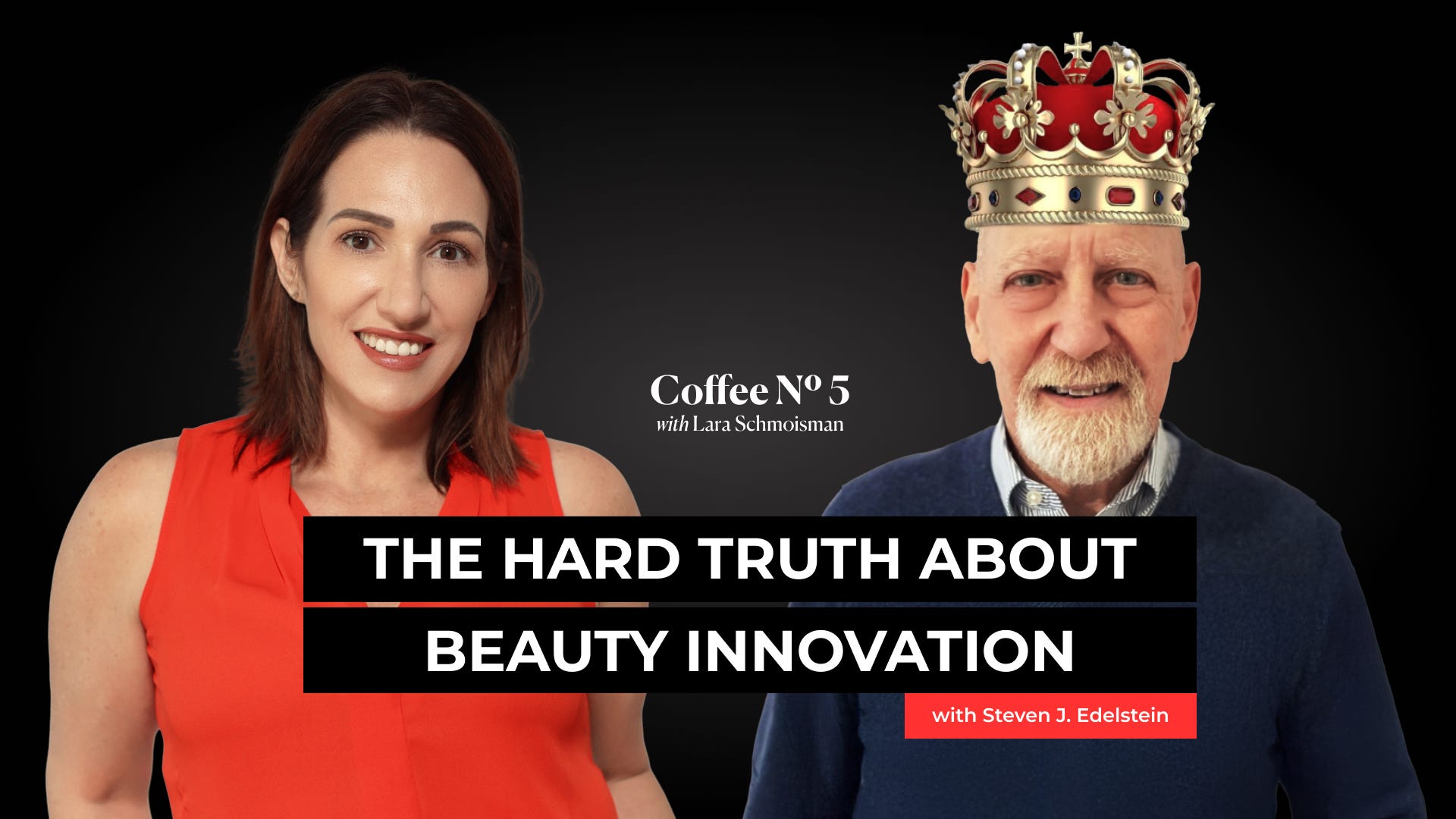
Steven J. Edelstein, VP of Growth & Partnerships at MyFBAPrep, joins Lara Schmoisman to unpack why most brands fail before they scale—covering pricing strategy, supply chain traps, trade show mistakes, and the future of beauty innovation through personalization and smarter storytelling.
We'll talk about:
Why pricing strategy must start with your audience—not just your ingredients
The real margin rules that make or break a brand
The hidden costs in supply chain and trade shows that drain young businesses
How copying formulas and white-labeling kills true innovation
Why personalization and lifestyle-driven products will define the next decade
The shift from discounts and one-off sales to loyalty and continuity programs
How to create emotional connection that keeps customers coming back
The future of beauty: smarter delivery systems, niche focus, and brands that actually solve problems
For more information, visit Steven J. Edelstein's LinkedIn.
Subscribe to Lara’s newsletter.
Also, follow our host Lara Schmoisman on social media:
Instagram: @laraschmoisman
Facebook: @LaraSchmoisman